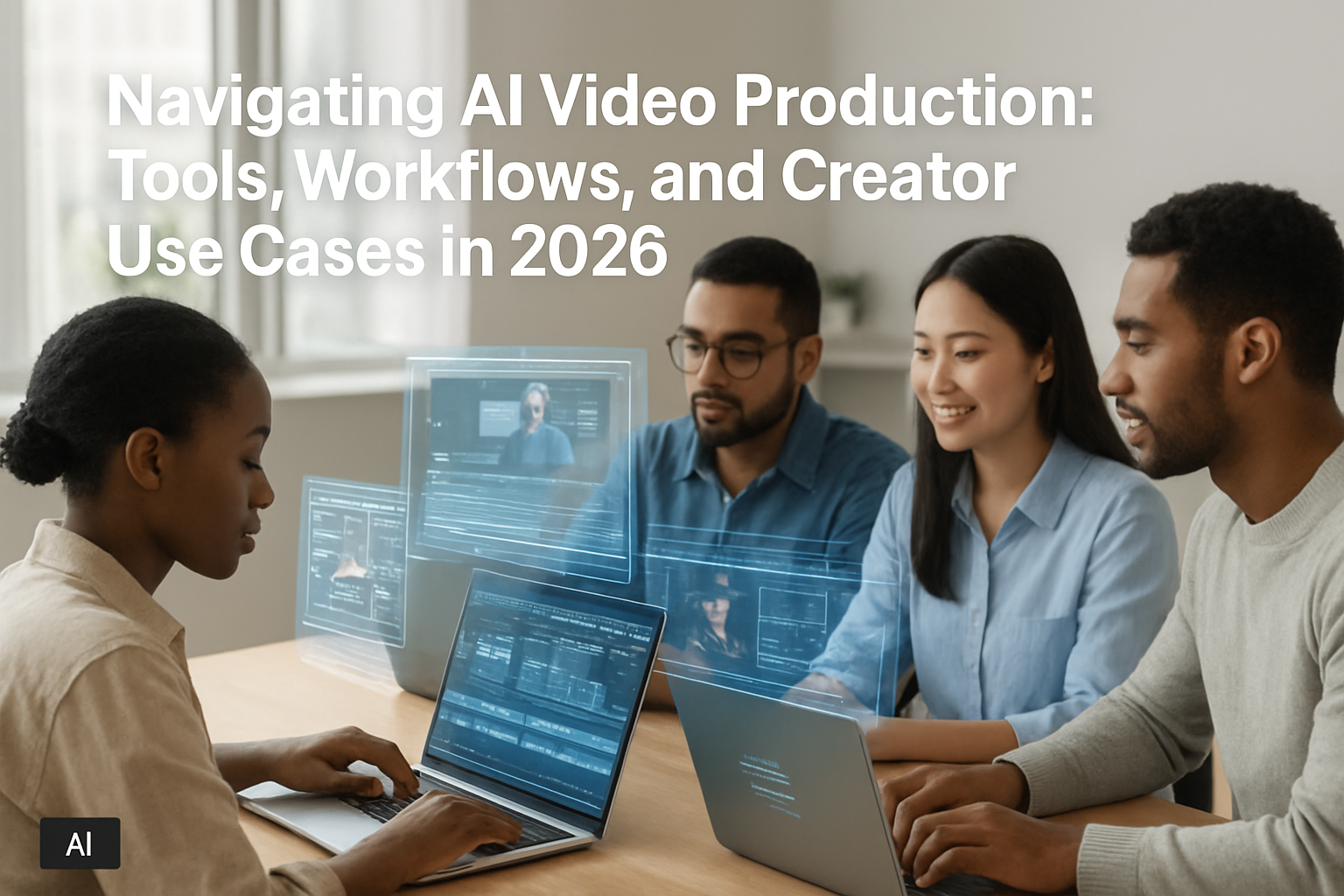
Introduction to AI Video Production
Artificial Intelligence (AI) is reshaping video production, democratizing access to advanced tools and accelerating workflows. Whether you are a beginner exploring video content or a seasoned professional crafting complex projects, AI-driven video production tools offer powerful features that can streamline processes and boost creativity.
This article explores key AI video production tools, practical workflows, distinctive AI model features, and how diverse creators leverage these capabilities globally in 2026.

AI Video Production Tools: Overview and Features
AI video production tools now integrate machine learning, computer vision, natural language processing, and generative models to automate and enhance many stages of video creation.
- Scriptwriting and Storyboarding: AI tools analyze input prompts to generate scripts or visual storyboards, instantly shaping project direction.
- Automated Editing: Intelligent editors recognize scenes, cut footage, and optimize transitions based on style presets or content analysis.
- Visual Effects and Enhancements: AI models upscale resolution, apply cinematic filters, stabilize shaky footage, and generate synthetic backgrounds or elements.
- Text-to-Video Generation: The latest generative AI models create short video segments directly from text prompts, offering rapid prototyping options.
- Voice Synthesis and Dubbing: Natural language generation powers voiceovers, dubbing in multiple languages, and adaptive sound design.
Efficient AI Video Production Workflows
Integrating AI tools into workflows varies by skill level and project goals, but some common patterns emerge.
- Concept Development: Begin with automated brainstorming assistants that draft script outlines or mood boards.
- Content Creation: Use AI-driven text-to-video or text-to-image tools to generate initial raw footage or visual assets rapidly.
- Editing and Refinement: Employ smart editors with AI enhancements to trim clips, add transitions, and apply effects with minimal manual input.
- Voice and Sound Integration: Add AI-generated narration and soundtracks tailored to the video’s tone and audience.
- Review and Iteration: Leverage AI-powered feedback tools that suggest improvements on pacing, clarity, and viewer engagement.
- Publishing and Optimization: Use AI to tailor video metadata, thumbnails, and platform-specific adjustments for maximum reach.
Distinctive AI Model Features to Watch
In 2026, AI video production models continue to evolve with standout features:

- Multimodal Understanding: Advanced models interpret text, audio, and visual inputs simultaneously to produce consistent narratives and logical transitions.
- Real-Time Collaboration: Cloud-based AI video editors enable multiple users to co-create and apply AI enhancements in sync.
- Customization and Control: Artists and businesses can fine-tune AI parameters, from visual aesthetics to tone, ensuring brand alignment.
- Ethical AI Filters: Automated detection of deepfakes, copyright infringements, and inappropriate content helps maintain content integrity.
- Cross-Platform Integration: AI tools offer seamless export and adaptation for social media, web, broadcast, and mobile formats.
Creator Use Cases Across Industries and Roles
AI video production touches a wide range of users globally:
- Beginners and Students: Low-cost AI platforms lower barriers to entry, enabling quick video projects for education, personal storytelling, or social media presence.
- Freelancers and Small Businesses: Automating repetitive editing and content localization helps manage workloads and increase output without large teams.
- Marketing Teams: Dynamic AI tools create personalized ad videos, optimize campaigns, and accelerate creative testing with data-driven insights.
- Entertainment Professionals: Directors and editors employ AI to prototype scenes, enhance footage quality, or develop synthetic characters and environments.
- Content Platforms: AI moderates uploaded videos, generates subtitles, and optimizes metadata to improve discoverability and compliance.
Pros and Cons of AI Video Production
Pros
- Significantly reduces production time and costs
- Enhances creative possibilities with generative and enhancement tools
- Makes advanced video creation tools accessible to non-experts
- Supports multi-language and multi-format adaptability
- Enables rapid iteration driven by data insights
Cons
- Dependence on AI may cause loss of human nuance in storytelling
- Quality and originality can vary between AI model outputs
- Ethical concerns around synthetic media and misinformation
- Requires ongoing updates to AI models and tool compatibility
- Risk of over-automation reducing artisanal craft in production
My Take: The Practical Future of AI Video Production
AI tools will not replace human creators but will increasingly serve as sophisticated collaborators. For global audiences—spanning experts, beginners, and businesses—these tools offer real value in simplifying complexity and expanding creative potential.
However, adopting AI video production requires critical judgment about when to rely on automation versus manual creativity. Ethical use and quality control matter more than ever to maintain trust and originality in video content.
As AI models grow smarter and more multimodal, expect smoother integrations and new creative frontiers, especially in real-time video experiences and personalized storytelling.
FAQs
- What is the best AI tool for beginners in video production? Tools with simple text-to-video features and guided editing interfaces are recommended for beginners to quickly create content without technical expertise.
- Can AI fully edit videos automatically? While AI automates many editing tasks, human input remains essential for fine-tuning creative decisions, especially for complex projects.
- Are AI-generated videos copyright safe? Using AI tools usually involves reviewing licensing agreements; synthetic content may have restrictions and should be carefully vetted.
- How do AI tools handle multiple languages in video? Many AI platforms integrate natural language processing to offer voice synthesis, subtitles, and translations adaptable across languages and regions.
- Will AI video production replace traditional filmmakers? AI is a complement rather than replacement. Filmmakers still bring unique vision and storytelling expertise critical to impact and emotional depth.
Note: Always verify prices, feature availability, and official offers directly from vendor websites or authorized sources before making decisions.